Why is my refrigerator making a loud buzzing noise?
A loud buzzing fridge is usually a fan, a failing compressor, or a vibration issue. Here is how to tell which one you have and what to do next in Seguin.
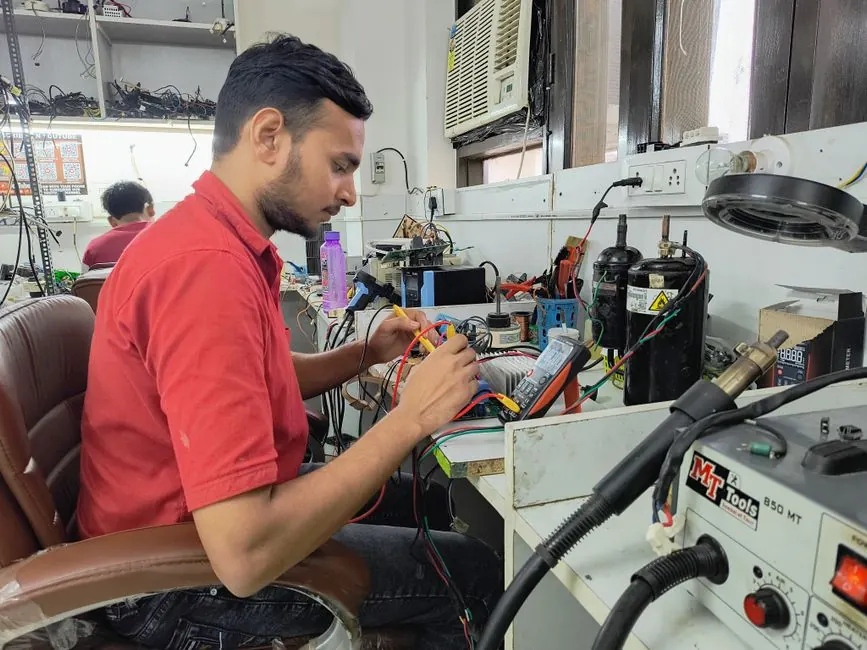
A refrigerator making a loud buzzing noise is almost always caused by one of four things: a failing condenser or evaporator fan motor, a compressor that is straining to start, a loose panel or drain pan vibrating against the frame, or a relay on the compressor that is chattering. The buzzing itself is not the problem - it is a symptom, and the fix depends entirely on which part is making the sound.
Below we walk through each cause in plain terms, tell you what you can safely check in five minutes, and explain when a buzzing fridge in Seguin needs a technician instead of a screwdriver.
The short answer: what a loud buzzing fridge usually means
A refrigerator making a loud buzzing noise is an audible symptom that one mechanical or electrical component has moved out of tolerance - a worn fan bearing, a compressor start relay, a loose mount, or debris touching a moving part. It is not a normal operating sound, and it rarely fixes itself.
Normal fridge sounds are a low hum from the compressor, the soft whoosh of the fans, the click of the thermostat, and the occasional gurgle of refrigerant. A buzz is different. It is sharper, more electrical, and it usually gets louder over weeks, not days.
If you want a quick rule of thumb: a steady hum is fine, a rhythmic buzz is a fan, a harsh rattle-buzz is a compressor or mount, and a buzz that clicks on and off every few seconds is a start relay. That last one is the one you should not ignore.
Our team handles refrigerator repair Seguin TX calls every week where the homeowner waited a month on a buzz that turned out to be a $40 relay. Waiting did not save money - it cooked the compressor.
The six most common causes of a fridge buzzing sound
Fridge buzzing sound causes fall into two families: moving parts (fans, compressors) and non-moving parts that have come loose (panels, drain pans, tubing). Here are the six we see most often in Seguin homes.
1. The condenser fan motor
The condenser fan sits behind or underneath the fridge, near the compressor. It pulls air across the condenser coils to dump heat. When the bearings wear out, the fan does not stop - it buzzes. You will usually hear it most when the compressor is running, and it will sound like it is coming from the back bottom of the unit.
Unplug the fridge, pull it out, and look at the fan blade. If it wobbles, has play in the shaft, or has hair and dust wrapped around the hub, that is your buzz. A refrigerator fan motor repair Seguin TX is one of the more affordable fixes we do - usually under an hour on site.
2. The evaporator fan motor
The evaporator fan is inside the freezer compartment, behind the rear panel. It circulates cold air into the fridge side. When it fails, you get a buzz from inside the freezer, and often the fridge side stops getting cold while the freezer stays fine.
This is the classic "fridge fan making buzzing noise" scenario. If you open the freezer and the buzz gets louder, the evaporator fan is the culprit. Do not run the fridge long in this state - the ice maker and fridge compartment will warm up.
3. The compressor
A noisy refrigerator compressor can buzz for two reasons. The first is internal wear - the compressor is on its way out and the buzz is the sound of metal on metal inside the sealed housing. The second is that the compressor is not getting enough voltage to start cleanly, so it strains.
You can often tell the difference by listening. A compressor that buzzes for 5-10 seconds, clicks off, then tries again is a start problem. A compressor that buzzes continuously and gets hot to the touch is a wear problem. Both need a refrigerator compressor repair Seguin TX diagnosis before you spend money on anything else.
4. The start relay and overload protector
This is the small device clipped to the side of the compressor. It gives the compressor a jolt of power to get the motor spinning. When it fails, it chatters - a fast, sharp buzz-click-buzz that repeats every few seconds. This is the single most common cause of a refrigerator buzzing noise that comes and goes.
Replacing a start relay is inexpensive and quick. Ignoring it is expensive, because the compressor keeps trying to start and eventually burns out.
5. Vibration against the frame, wall, or floor
Sometimes the fridge is fine and the buzz is mechanical contact. A drain pan that slid forward, a copper line touching the back panel, a fridge that is not level, or a unit pushed too close to the wall will all buzz. This is the refrigerator vibration sound troubleshooting you can do yourself in two minutes.
Push the fridge an inch away from the wall. If the buzz changes or stops, you found it. Level the unit with the front legs slightly higher than the back so the doors swing shut on their own and the compressor mount settles.
6. A failing control board or thermostat
Less common, but real. A relay on the main control board can buzz when it is failing, and a thermostat that is short-cycling will make the compressor kick on and off with a buzz each time. If the buzz is coming from the top of the fridge near the display or the temperature dial, this is likely your issue.
We test the board and thermostat together, because a bad thermostat can mimic a bad board and vice versa. If you are also seeing temperature swings, our refrigerator temperature issue repair Seguin TX service covers both.
Is a buzzing refrigerator dangerous? How to tell if it is serious
A buzzing refrigerator is not usually a fire hazard, but a compressor that is short-cycling or a board that is arcing can be. The line between "annoying" and "call today" is easy to draw once you know what to listen for.
- Annoying but stable: steady buzz, fridge still cold, freezer still frozen. You have time - but book it.
- Getting worse: buzz is louder than last week, or the fridge is running longer than usual. The part is failing.
- Call today: buzz-click-buzz every few seconds, fridge side warming up, freezer still cold, or a burning smell near the back.
- Unplug now: any smell of hot plastic or electrical burning, or visible scorching on the compressor terminals.
How to tell if a fridge buzzing sound is serious comes down to two questions: is the fridge still holding temperature, and is the buzz changing? If the answer to the first is no, or the second is yes, stop guessing.
What to check before you call anyone
What to check when a refrigerator starts buzzing loudly takes about five minutes and can save you a service call. Do these in order, and unplug the fridge before you touch anything behind it.
- Pull the fridge out from the wall. Give it 2-3 inches of clearance. If the buzz stops, it was contact vibration.
- Level the unit. Front legs should be about a quarter-inch higher than the back so the doors self-close and the compressor sits flat.
- Check the drain pan. It sits under the fridge near the compressor. If it is loose or full of water, it will buzz against the frame.
- Vacuum the condenser coils. Dust buildup makes the condenser fan work harder and louder. Twice a year is the rule in this part of Texas.
- Listen with the door open. If the buzz gets louder when you open the freezer, it is the evaporator fan. If it stays the same, it is the condenser fan or compressor.
- Check the temperature. Put a thermometer in a glass of water in the fridge overnight. It should read 35-38°F. The freezer should hold 0°F.
If none of that changes the buzz, the problem is internal - a fan bearing, a relay, or the compressor itself. That is when you stop and call.
Common mistakes homeowners make with a noisy refrigerator
The most expensive mistake we see is waiting. A buzzing start relay costs very little to replace. A compressor that dies because the relay was ignored costs several times more, and on a fridge over 12 years old, it usually means replacement instead of repair.
Second mistake: turning the temperature dial down to compensate. If the fridge is buzzing because the evaporator fan is failing, dropping the setpoint just makes the compressor run longer and the buzz worse. It does not fix airflow.
Third mistake: spraying lubricant into a fan motor. You cannot re-oil a sealed fan bearing, and the spray attracts dust that accelerates the wear. Replace the motor, do not grease it.
Fourth mistake: assuming a new fridge is the answer. In 2026, a comparable replacement runs $900-$2,200 installed, plus haul-away. Most buzz repairs we do land between $150 and $450 in parts and labor. Repair first, replace only when the compressor is confirmed dead.
Fifth mistake: ignoring a second symptom. A buzz plus water on the floor is a different problem than a buzz alone. If you are also seeing moisture, that is a refrigerator water leak repair Seguin TX issue and it needs to be handled before the floor or cabinet swells.
When to call a professional for refrigerator noise
When to call a technician for refrigerator noise is simple: call when the buzz is accompanied by a temperature change, when you hear clicking, or when the sound is coming from inside the sealed compressor area. Those are not DIY repairs.
We are Seguin Texas Refrigerator Repair Pros, and we work on every major brand - Whirlpool, GE, Samsung, LG, Frigidaire, Kenmore, and the older units still running in homes around the Guadalupe County courthouse square. We diagnose the noise, tell you what it costs to fix, and do the work the same visit whenever the part is on the truck.
If you are in the older housing stock near downtown Seguin or out toward Geronimo and McQueeney, we also see a lot of fridges on older wiring where voltage sags make a compressor buzz louder than it should. That is a diagnosis, not a guess.
Frequently Asked Questions
Why is my refrigerator making a loud buzzing noise?
The most common causes are a worn condenser or evaporator fan motor, a failing compressor start relay, a compressor that is straining, or a loose drain pan vibrating against the frame. A buzz-click-buzz that repeats every few seconds points to the start relay.
Can a refrigerator compressor make a buzzing sound?
Yes. A compressor buzzes when its internal bearings wear or when it is not receiving enough voltage to start cleanly. If the buzz lasts 5-10 seconds, stops, then repeats, the compressor is trying to start and failing - that needs a technician quickly.
Should I unplug a refrigerator that is buzzing loudly?
Unplug it immediately if you smell burning plastic, see scorch marks near the compressor, or hear arcing. Otherwise, unplug it only long enough to pull it out and check the fan and drain pan. Do not leave a fridge unplugged for more than a few hours with food inside.
Can a refrigerator fan cause a loud buzzing noise?
Yes, and it is the most common cause. A fan with worn bearings or debris wrapped around the blade buzzes instead of humming. Condenser fans buzz from the back bottom; evaporator fans buzz from inside the freezer. Both are replaceable in under an hour.
Who repairs noisy refrigerators in Seguin TX?
Seguin Texas Refrigerator Repair Pros handles noisy refrigerator diagnosis and repair across Seguin and Guadalupe County. We test the fans, relay, compressor, and mounts in one visit and give you a straight answer on repair versus replace.
Get help with refrigerator repair in Seguin
A buzzing fridge is a small problem today and an expensive one next month. We will find the source of the noise, tell you what it costs, and get your kitchen quiet again - usually the same day.
Call Seguin Texas Refrigerator Repair Pros at 1123123123 and describe the sound. That is often enough for us to know what to bring on the truck.